4th of July Safety Tips for Virginia Homeowners
Home Insurance, Holiday Safety, Virginia Homeowners
4th of July Home Safety Tips for Virginia Homeowners
Practical ways to enjoy Independence Day in Central Virginia while protecting your family, guests, and home and how Tabetha Campbell Thompson Agency, Inc. can help you prepare from an insurance standpoint.
The 4th of July is one of the best weekends of the summer. Families are together, grills are going, and neighborhoods across Central Virginia are getting ready to celebrate.
It is also one of the most active weekends for home insurance claims.
Fireworks, summer storms, cookouts, and a yard full of guests can all create unexpected problems. A little preparation before the holiday weekend can protect your family, your home, and your peace of mind.
Here is what Virginia homeowners should know before the celebrations begin.
1. Check the Local Fireworks Rules First
Before you light anything, check what is actually legal in your city or county.
In Virginia, some fireworks are permitted for private use, including certain sparklers, fountains, and ground-based sparkling devices. But local rules can be stricter, and some localities restrict or ban consumer fireworks entirely.
Fireworks that explode, launch into the air, travel across the ground, or act as projectiles are treated differently from approved permissible fireworks. Those may require professional handling, a permit, and proper certification.
If you are not sure what is allowed where you live, contact your local fire marshal, fire department, or local government before the holiday weekend.
When in doubt, a professional fireworks show is always the safer choice.
2. If You Use Approved Fireworks, Do It Safely
Even ground-based fireworks and sparklers can cause injury, burns, or property damage when handled carelessly.
If fireworks are allowed in your area, keep these basics in mind:
Only buy from approved sellers
Light fireworks outdoors, away from homes, vehicles, and dry grass
Keep a bucket of water and a charged hose nearby
Never hold fireworks near your face or clothing
Never try to relight a firework that did not go off
Soak used fireworks before throwing them away
Keep children and pets at a safe distance at all times
Even after a firework appears to be finished, it can still be hot. A single spark near dry leaves or mulch can turn into a serious fire risk quickly.
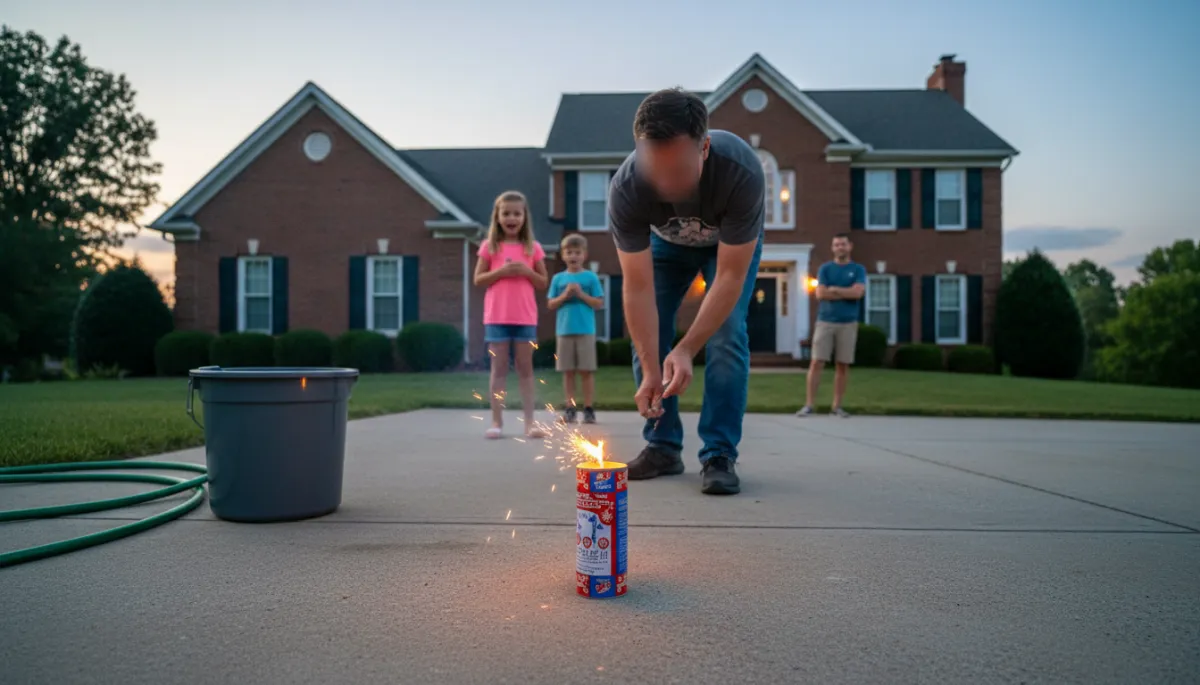
Distance, water nearby, and supervision turn a quick fireworks moment into a safer tradition.
3. Move the Grill Away From the House
Cookouts are a summer staple, but grills are one of the leading causes of home fires during the holiday season.
Before guests arrive, make sure your grill is positioned well away from siding, deck railings, overhangs, outdoor furniture, and anything flammable. Keep a fire extinguisher close, clean grease buildup before cooking, and never leave the grill unattended.
A holiday cookout should be a good memory, not a claim.
4. Do a Quick Walkthrough of Your Yard Before Guests Arrive
When your home gets busier, small hazards become bigger risks.
Before the weekend, take a short walk around your property and look for anything that could cause a problem: loose steps, uneven walkways, extension cords in foot traffic areas, low lighting near entrances, unsecured patio furniture, or toys and tools left in walking paths.
If you have a pool, trampoline, fire pit, or play area, make sure children are supervised and guests know the house rules.
This is also a good moment to think about your homeowners liability coverage. If a guest is injured on your property, the details of your policy can matter more than most people expect.
5. Secure Your Pets Before the Fireworks Start
Fireworks are stressful for most pets, even dogs and cats that seem calm in everyday settings.
Keep pets indoors once fireworks begin, make sure doors and gates are secured, and consider running a television or music to reduce the outside noise. If guests are coming and going, let them know in advance where pets should and should not be.
A scared pet can disappear through an open door in seconds.
6. Prepare for Summer Storms
Virginia summer weather can shift quickly. Heavy rain, high winds, falling branches, and power outages are all realistic possibilities around a holiday weekend.
A few things worth doing before the 4th:
Clear gutters and downspouts
Trim branches close to your home
Secure or bring in patio furniture and umbrellas
Check your roof for any visible damage
Move anything important away from areas that tend to leak
Make sure your sump pump is working, if you have one
Store your insurance documents somewhere you can find them easily
Storm prep does not take long, and it is much easier before damage happens than after.
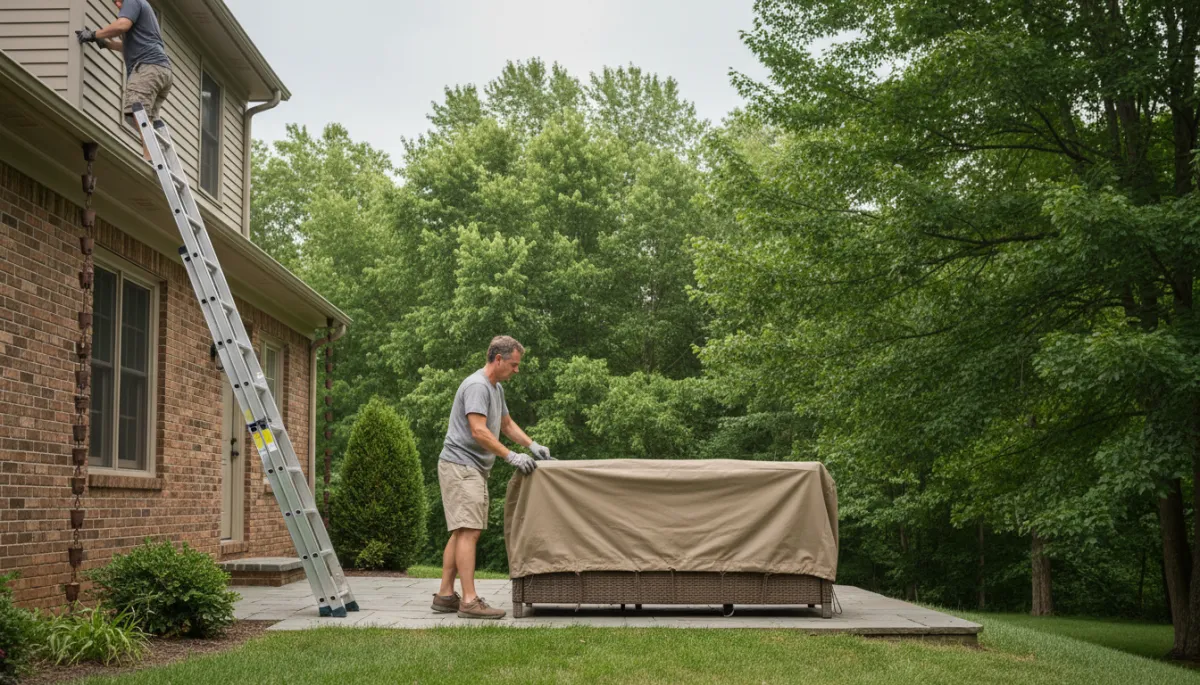
A few minutes of storm prep can prevent both damage and avoidable insurance claims.
7. Understand How Your Policy Handles Water Damage
One of the most common questions after a summer storm is whether the damage is covered.
The answer depends on how the water entered your home.
Water from a sudden internal problem, like a burst pipe, is typically handled differently than water that enters from outside during a storm. Flooding caused by rising water generally requires separate flood insurance that is not part of a standard homeowners policy.
A question worth asking before storm season is fully underway:
"What type of water damage does my homeowners policy actually cover, and is there anything that would require a separate flood policy?"
It is a much easier question to answer before water is already inside your home.
8. Take 10 Minutes for a Homeowners Insurance Checkup
The 4th of July weekend is a natural pause in the summer. Before the gatherings start, it is worth spending a few minutes making sure your homeowners coverage still fits your home and your life. A quick review with Tabetha Campbell Thompson Agency Inc. can help you spot gaps before they become problems, especially around fireworks, guests, and severe weather.
A few questions worth knowing the answers to:
What is my deductible, and does my policy have a separate deductible for wind or hail?
What is my liability limit if a guest is injured?
Does my policy cover the type of water damage most likely in my area?
Do I have flood insurance?
Have I made updates to my home that I have not reported to my agent?
Is my home insured at what it would actually cost to rebuild today?
Do I have a basic home inventory or photos of valuables?
These are simple questions with answers that can make a significant difference when you need to use your policy.

A brief policy review before the 4th can clarify coverage when it matters most.
A Note for Central Virginia Homeowners
Whether you are in Petersburg, Richmond, Chesterfield, Henrico, Colonial Heights, Hopewell, or another part of Central Virginia, summer is one of the best times to do a quick policy review.
Holiday weekends, summer storms, and guests in your home can all increase the chance of something unexpected happening. A short conversation with a local agent can help you understand what your policy covers, what it does not, and whether anything needs to be updated.
Enjoy the 4th
The 4th of July should be exactly what it is meant to be: family, celebration, and summer in Virginia.
A little preparation before the weekend starts makes it easier to enjoy all of it without the worry.
If you have questions about your homeowners coverage, liability limits, water damage, or whether your policy is still a good fit for your home, reach out anytime.
📞 Call or text us: 804-220-5144
Schedule a Homeowners Insurance Review
Frequently Asked Questions
Are fireworks legal in Virginia?
Some fireworks are legal for private use in Virginia, including certain sparklers, fountains, and ground-based sparkling devices. However, local rules can be stricter, and some localities restrict or ban consumer fireworks entirely. Fireworks that explode, launch into the air, or travel across the ground are regulated differently. Contact your local fire marshal or local government to confirm what is allowed in your area.
Does homeowners insurance cover fireworks damage?
It depends on the specifics of the situation and the details of your policy. Coverage is not automatic, and the circumstances matter. A licensed insurance professional can help you understand what your policy does and does not cover.
Does homeowners insurance cover water damage from summer storms?
It depends on how the water entered your home. Sudden internal water damage is typically handled differently than water entering from outside. Flooding caused by rising water usually requires separate flood insurance. If you are unsure, reviewing your policy before storm season is the best approach.
What should I check on my homeowners policy before summer?
At minimum, review your deductible, liability coverage limit, how your policy handles water damage, whether you have or need flood insurance, and whether your home is insured for what it would actually cost to rebuild today. A local agent can walk through all of these with you.
What does liability coverage on a homeowners policy do?
Liability coverage helps protect you if someone is injured on your property or if you are found responsible for damage to someone else's property. It is one of the most important and most overlooked parts of a homeowner's policy.


