How to Spot and Avoid Scams and Financial Fraud
How to Spot and Avoid Scams and Financial Fraud
Scams are constantly changing, but many of the tactics scammers use remain surprisingly consistent. The best defense is to recognize the pressure, pause before responding, and independently verify what you’re being told. Be especially cautious when someone contacts you unexpectedly, promises unusually high or guaranteed returns, demands secrecy, or pressures you to act immediately.
What Are the Warning Signs of a Scam?
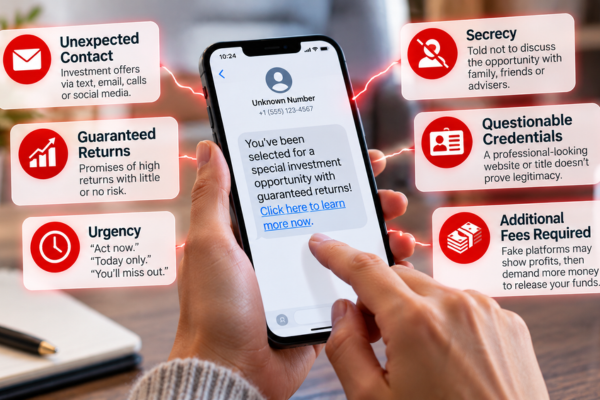
Scammers don’t always look or sound suspicious. Appearing trustworthy is often part of the strategy.
FINRA identifies recurring persuasion techniques that fraudsters may use, including creating the illusion of easy wealth, establishing false credibility, suggesting that other people are already participating, offering a small favor to create a sense of obligation, and manufacturing scarcity or urgency.
Watch for these common red flags:
Unexpected contact. Be cautious about investment opportunities arriving through unsolicited texts, emails, calls, or social media messages.
Guaranteed returns. Promises of high returns with little or no risk should raise questions.
Urgency. “Act now,” “today only,” or “you’ll miss out” may be attempts to keep you from slowing down and checking the facts.
Secrecy. Someone telling you not to discuss an opportunity with family, friends, or advisers is a warning sign.
Questionable credentials. A professional-looking website, title, or social media profile does not prove legitimacy.
Requests for more money. Fake trading platforms may show fictitious profits and then demand additional fees or taxes before supposedly allowing you to withdraw your money.
Why Is Pausing So Important?
Urgency benefits the scammer—not you.
When someone insists that you must make a financial decision immediately, slowing down gives you time to think, investigate, and seek another opinion.
FINRA’s fraud-prevention guidance recommends essentially deciding now to decide later when confronted with a high-pressure investment pitch.
Give yourself permission to end the conversation or simply say:
“I need time to verify this independently.”
That small pause can interrupt the emotional pressure the scammer is trying to create.
How Should You Verify an Offer?
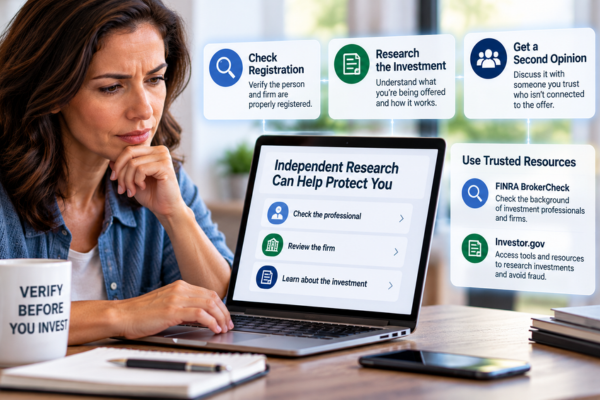
Don’t rely solely on the website, phone number, credentials, testimonials, or links supplied by the person making the offer.
Verify independently.
For investment-related offers, check whether the person and firm are appropriately registered and research the investment itself. FINRA recommends resources such as BrokerCheck, while SEC resources can help investors research investment advisers and securities information.
You can also use Investor.gov's investment protection resources to research investments and investment professionals.
Remember: a polished website or convincing online profile is not proof that an opportunity is legitimate.
What If Something Doesn’t Feel Right?
Talk to someone you trust before sending money or sharing sensitive personal or financial information.
Scammers may try to isolate their targets. FINRA warns about promoters who encourage secrecy and recommends discussing an investment decision with a trusted person who has no connection to the offer.
And if you’ve already responded to something suspicious, don’t let embarrassment prevent you from seeking help. Stop sending money, preserve relevant messages and records, and contact the appropriate financial institution, regulator, or law-enforcement authority.
Financial fraud can cause shame, fear, anger, anxiety, and loss of trust. FINRA Investor Education Foundation materials emphasize seeking help, reporting the crime, staying connected, and recognizing that scammers deliberately use sophisticated persuasion and manipulation techniques.
Frequently Asked Questions About Scams and Financial Fraud
What are the most common warning signs of a financial scam?
Common warning signs include guaranteed or unusually consistent returns, unsolicited offers, pressure to act immediately, requests for secrecy, unregistered investments or sellers, and strategies that are difficult to understand or verify. Any of these should be a reason to pause and investigate before sending money.
How can I tell if an investment opportunity is legitimate?
Verify it independently rather than relying on information supplied by the person promoting it. Check the investment professional, firm, and investment through appropriate regulatory resources such as FINRA BrokerCheck and SEC resources.
What should I do if someone pressures me to invest immediately?
Don’t let their deadline become yours. Artificial scarcity and urgency are common persuasion techniques. Give yourself time to investigate the opportunity and discuss it with someone you trust before making a decision.
Can a professional-looking website or trading platform still be a scam?
Yes. Fake trading platforms can display convincing dashboards and fictitious profits. When victims attempt to withdraw their supposed earnings, scammers may demand additional fees or taxes even though the money invested may already be gone.
What should I do if I think I’ve been scammed?
Stop sending money and seek help as soon as possible. Preserve messages, transaction information, and other records, and report suspected fraud to the appropriate financial institution, regulator, or law-enforcement authority. Seeking support is also important, particularly when fraud has caused emotional or financial distress.
Remember: Pause. Verify. Then Act.
You don’t have to become an expert on every new scam.
Remember three things:
Spot the pressure. Pause before acting. Verify independently.
Those few extra minutes could help protect your money and personal information—and sharing what you know could help protect someone you care about.
For more information about recognizing investment fraud and protecting your money, visit FINRA's Protect Your Money resource center.
For a personalized review of your coverage and risks, reach out to Tabetha Campbell Thompson Agency today and Get a Quote that fits your life.


